Don’t Empower Too Early
HB Weekly Leadership Brief
Week of March 23, 2026
We love the language of empowerment. It sounds modern, healthy, and leadership-forward. Empower your young leaders. Empower your new managers. Empower the next generation. Empower the frontline.
But in practice, many leaders confuse empowerment with early delegation.
They hand off responsibility before trust, context, rhythm, and judgment have been built. Then the emerging leader struggles, loses confidence, or makes avoidable mistakes. The senior leader gets frustrated, pulls the work back, and concludes that the person “wasn’t ready.”
Usually, the issue is not the person. It is the sequence.
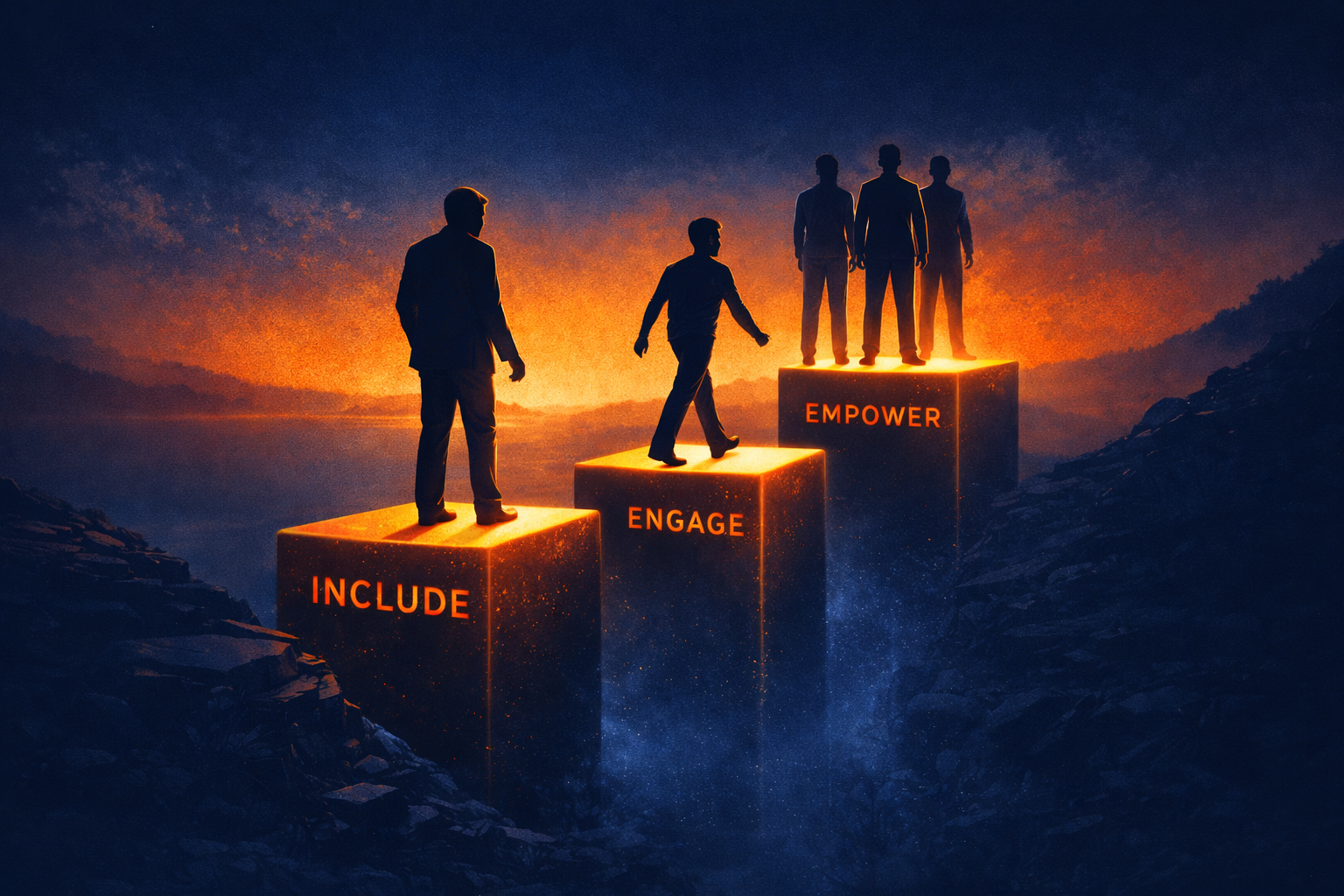
Real empowerment is not the first move of leadership development. It is the earned result of a process. First, we include people in meaningful spaces. Then we engage them in real work with support. Then, over time, we empower them to own it. That is how mature workers are formed. That is how confidence becomes competency. And that is how leaders stop mistaking exposure for readiness.
“Leadership is not about being in charge; it’s about taking care of those in your charge.” — Simon Sinek
“The best leaders do not lower the bar for emerging talent; they pair high standards with enough support to help people reach it.” — Dr. David Yeager
By The Numbers
Deloitte’s 2025 Global Human Capital Trends report states only 26% of organizations believe their managers are highly effective at enabling performance, while managers spend just 13% of their time developing people.
Deloitte’s 2025 Global Human Capital Trends research also states 67% of employees say their manager knows best what motivates them.
McKinsey’s 2024 performance management survey reported 72% of employees say goal setting is a strong motivator, especially when they are involved in shaping and revisiting those goals.
A Consult with Matt
While I was presenting recently on Volunteer Engagement at ESSAE’s luncheon to a room of nonprofit executives and staff leaders, we took one of those detours that I genuinely love in trainings. Someone raised the idea of empowerment, and before long, the room was no longer just talking about volunteers. We were talking about staff, supervisors, culture, leadership development, and the tension many organizations are feeling right now around how quickly we are trying to hand people ownership before they are truly formed for it.
That conversation stuck with me because empowerment is one of those words that everybody loves. It sounds healthy, modern, and people-centered. We want empowered teams. We want empowered young leaders. We want empowered frontline staff. We want people to feel trusted, valued, and able to act. And to be clear, I do too. We should absolutely be on a mission to empower our people. But what I think many leaders are missing is that empowerment is not the starting line. It is the later-stage result of intentional development.
Too often in today’s workplace, empowerment has become a kind of shortcut language for relief.
A leader is overwhelmed, wants to be less controlling, wants to be seen as supportive, or wants to meet the expectations of a newer generation of workers who are asking for voice, meaning, and responsibility.
So the leader hands something over too early. A meeting. A conflict. A project. A decision. A relationship. The problem is not the desire to trust people. The problem is that the runway has not been built. The person may have enthusiasm, intelligence, and good intent, but they have not yet had enough exposure, context, modeling, coaching, or supported repetition to carry the responsibility well.
That is where the IEE Continuum matters so much: Include. Engage. Empower.
First, we include people. That means we invite them into spaces they are not yet ready to lead, but absolutely need to witness. We let them sit in on the strategic meeting. We let them observe the difficult performance conversation. We expose them to how decisions are made, how budgets and finances are built, how tension is navigated, how priorities are sorted, how follow-up happens, and what good leadership looks and sounds like in motion. Inclusion is not passive or meaningless. It is the transfer of culture, judgment, and context. It is the “watch while I do it” phase. A healthy leader says: I want you near this because someday I may want you to carry this.
Then we engage them. This is where many leaders either hover too much or disappear too quickly. Engagement is the middle ground, and in my mind, it is where the real formation happens. The emerging leader is no longer just watching. They are now participating. Maybe they draft part of the agenda. Maybe they lead the opening of the meeting. Maybe they summarize the conflict issue before the manager steps in. Maybe they own one workstream of a project. The key is that they are doing real work while still being supported. This is the coaching phase. Mistakes are not only possible here; they are expected. Follow up, follow through and feedback loop are critical here. Engagement is where confidence gets tested, skill gets sharpened, and self-awareness starts to grow.
Only after those first two stages do we move to empowerment. And empowerment, when done correctly, is not dumping. It is not abdication. It is not delegated convenience. It is earned capacity. It is what happens when a person has seen enough, practiced enough, reflected enough, and aligned enough that you can step back without setting them up to fail. At that point, empowerment and mastery becomes durable. It is not performative trust. It is real trust built on demonstrated readiness.
This matters especially with young leaders, new supervisors, high-potential staff, and even volunteers who are moving into greater responsibility. We often see energy and assume readiness. We see passion and assume judgment. We see initiative and assume maturity. But leadership development does not work that way. Like a coach, a parent, or a mentor, we are supposed to build people progressively. We do not strengthen them by skipping steps. We strengthen them by sequencing growth. Inclusion gives them vision. Engagement gives them reps. Empowerment gives them ownership.
So when empowerment fails, the question is often not, What is wrong with them? The better question is, What did I skip? Did I include them enough? Did I engage them long enough? Did I stay close enough to coach without rescuing? Or did I jump straight to empowerment because I liked the idea of it more than the discipline required to develop it?
Empowerment is a process, not just a fancy word. And if we want mature workers, resilient supervisors, and future leaders who can truly carry the mission, then we have to stop treating empowerment like the first gift we hand out. We have to treat it like the fruit that grows after good leadership has done its work.
Weekly Reflection
Where am I currently giving someone responsibility that I have not fully prepared them to carry?
Who on my team needs more inclusion before I ask for more ownership?
Where could I create one meaningful engagement moment this week instead of either hovering or handing everything off?
Direct Application
Here are four very practical ways to use the Include → Engage → Empower continuum this week.
1. Strategic meeting development
Do not start by telling a younger staffer to “run the meeting.”
Include: Invite them into the strategic meeting and tell them ahead of time what to watch for: decision-making, power dynamics, agenda flow, and how disagreement is handled.
Engage: Have them capture themes on the whiteboard, summarize action items, or lead one short portion of the discussion. Debrief afterward.
Empower: Once they show judgment and steadiness, let them design and facilitate the meeting themselves.
2. Supervisory conversation development
Do not start by sending a new supervisor into a hard accountability conversation alone.
Include: Let them observe you handle a real performance conversation and tell them what you are paying attention to: tone, clarity, expectations, and follow-up.
Engage: Have them lead part of the conversation while you remain present and supportive.
Empower: Once they can prepare, conduct, and follow through consistently, let them own the full conversation.
3. Project ownership development
Do not start by handing over a cross-functional project with a quick “You’ve got this.”
Include: Bring them into planning calls, stakeholder conversations, and timeline reviews so they can learn the terrain.
Engage: Let them own one workstream, co-work on budgets, send updates, or manage one segment of the communication plan while you coach.
Empower: When they demonstrate follow-through, anticipation, and alignment, give them the full project.
4. Mentor-to-mentee leadership development
This is often the cleanest example.
Include: Bring the mentee with you. Let them listen. Let them see how you think, prepare, and show up.
Engage: Give them a task tied to the experience — draft the notes, lead the check-in, prepare the follow-up, or present one recommendation.
Empower: Once repetition, reflection, and feedback have done their work, step back and let them lead while you stay available from a distance.
Leadership Tool of the Week: Greenthumb Leadership
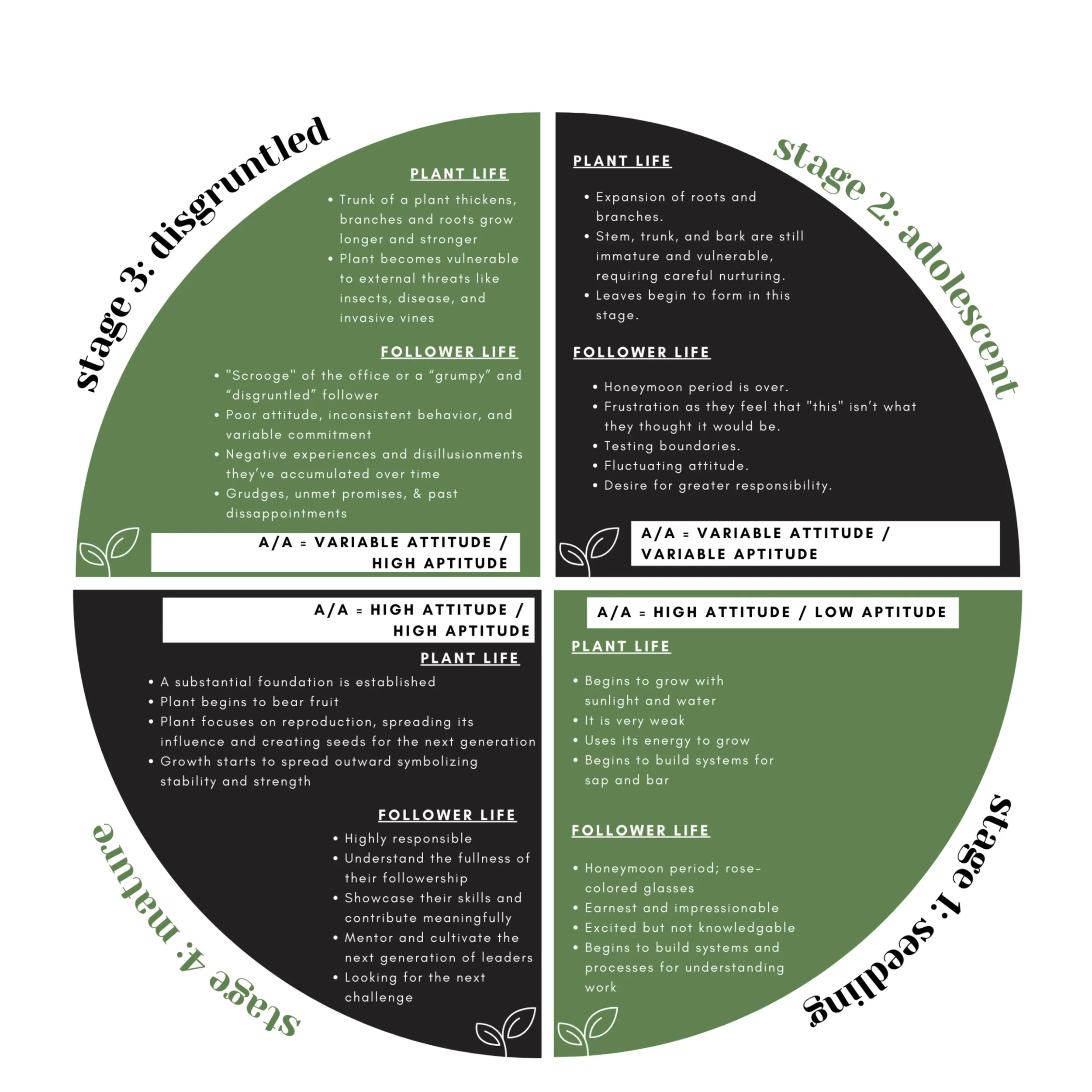
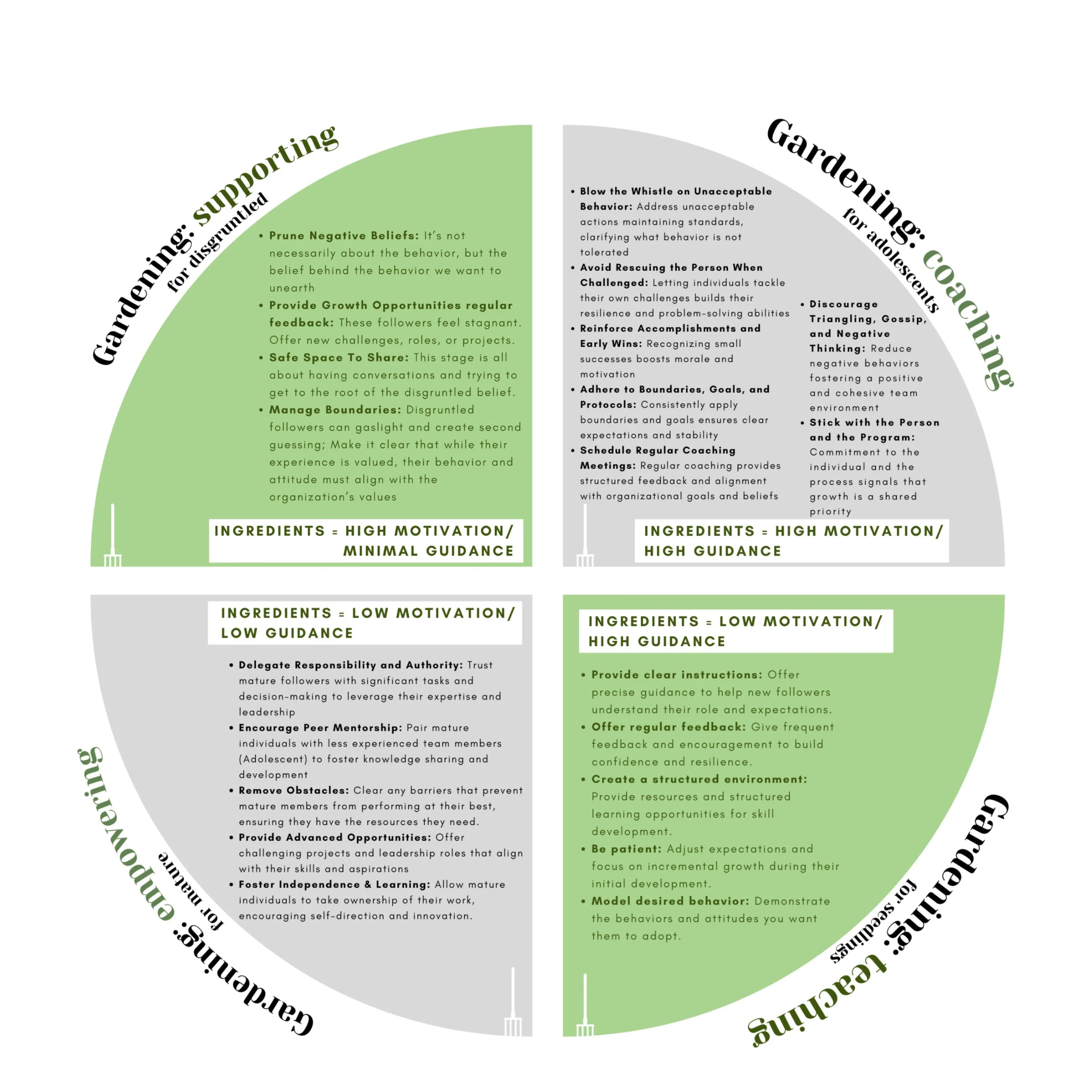
This week’s brief pairs naturally with Greenthumb Leadership. The model reinforces a simple but important truth: different stages of follower development require different kinds of leadership. Seedlings need direction and structure. Adolescents need coaching, accountability, and feedback. Disgruntled staff need support, listening and healing. Mature team members are where empowerment becomes appropriate and sustainable.