Leading Organizational Change in Chaotic Times
A Practical Guide for GetTING Back to the Fundamentals of Change
Special Offer for ESSAE Members
Free Download: Leading Organizational Change in Chaotic Times
Change is everywhere in our profession.
New mandates. New technology. New member expectations. New economic pressures.
As leaders, we pivot, react, implement, announce—and move on to the next challenge.
But rarely do we stop to ask the deeper questions:
What actually drives successful change?
Why do people resist it?
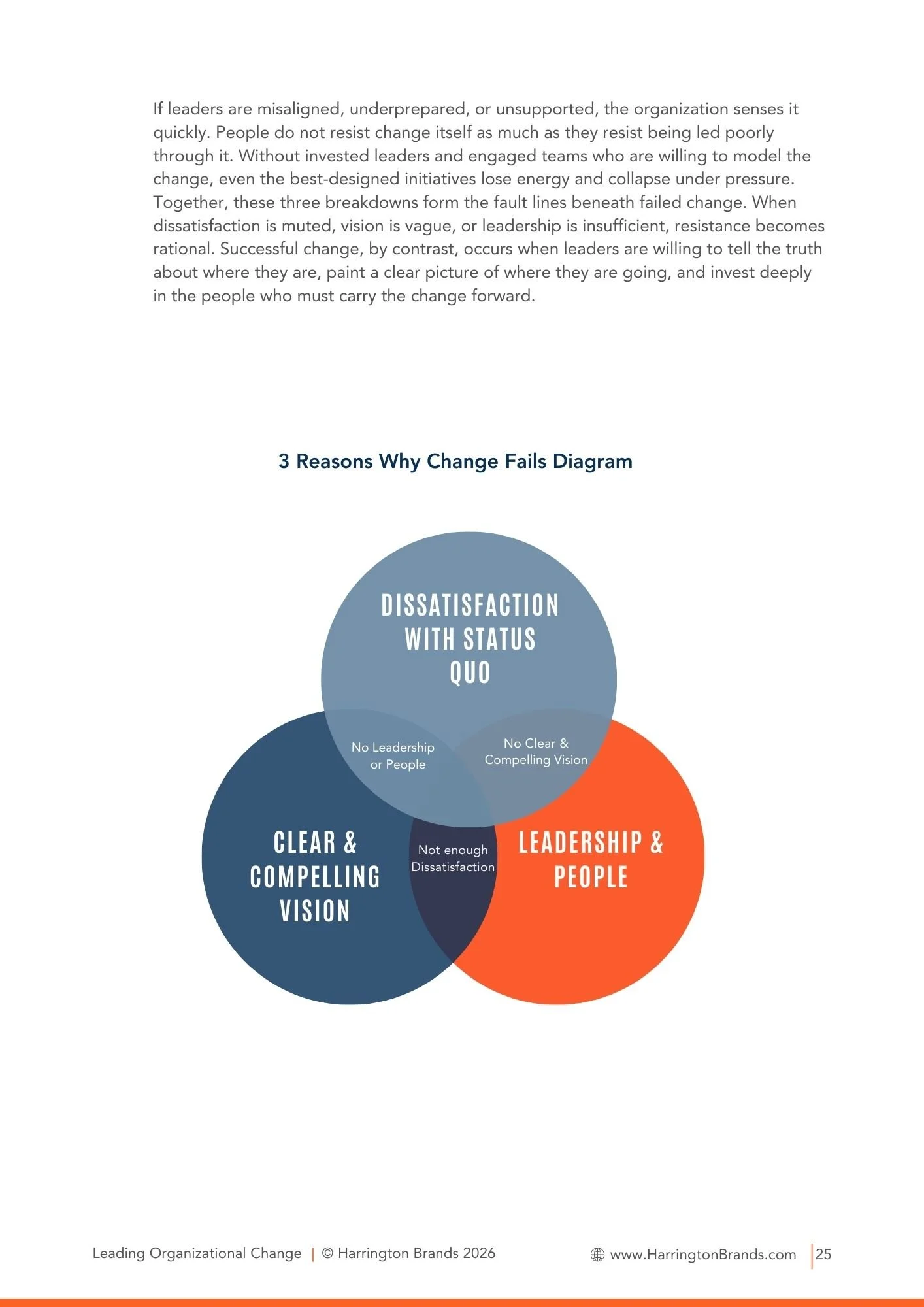
Why do well-intentioned initiatives stall or fail?
Why do some organizations adapt and thrive while others fracture under pressure?
Leading Organizational Change in Chaotic Times is an invitation to pause and think more deeply about how change really works.
This short leadership booklet isn’t about accelerating disruption or chasing the latest trend. It’s about returning to the science, psychology, and human dynamics that sit at the core of every successful transformation.
Because when leaders misunderstand change, one of two things happens:
We rush it, pushing initiatives before people are ready.
Or we absorb it, reacting to external forces and scrambling to stabilize afterward.
Neither approach creates lasting transformation.
What You’ll Learn
If you want to get inside the head of people — this is your guide.
Inside, you will learn:
Why change always begins with loss
How the Kübler-Ross change curve shows up in organizations
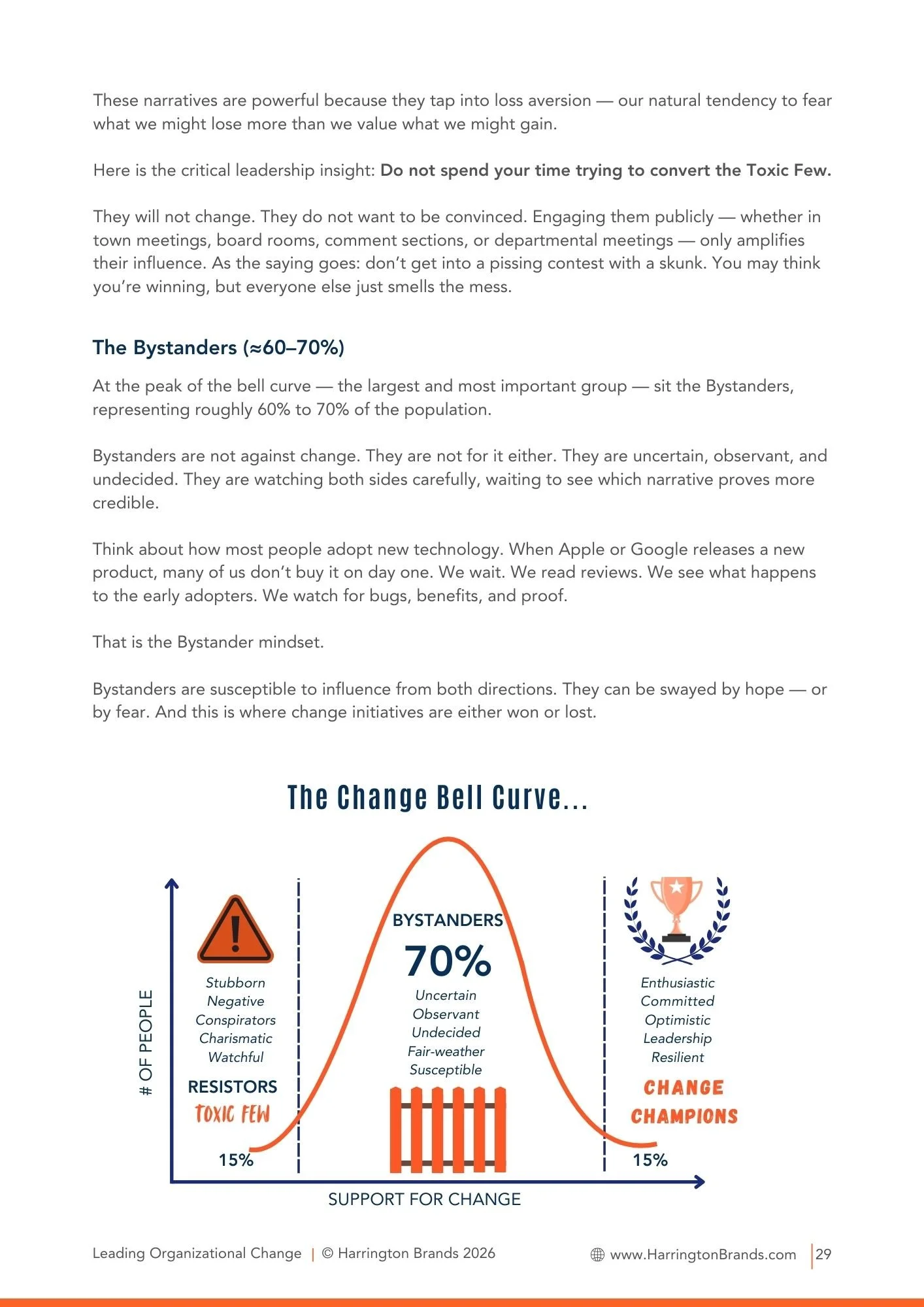
What the “change bell curve” is and why 70% of initiatives fail
What truly motivates people to start — or stop — change
The difference between Conservers, Pragmatists, and Originators
How to reduce resistance without lowering standards
Why to avoid “The Toxic Few” during change initiatives
How to rally your “Change Champions” and “Bystanders”
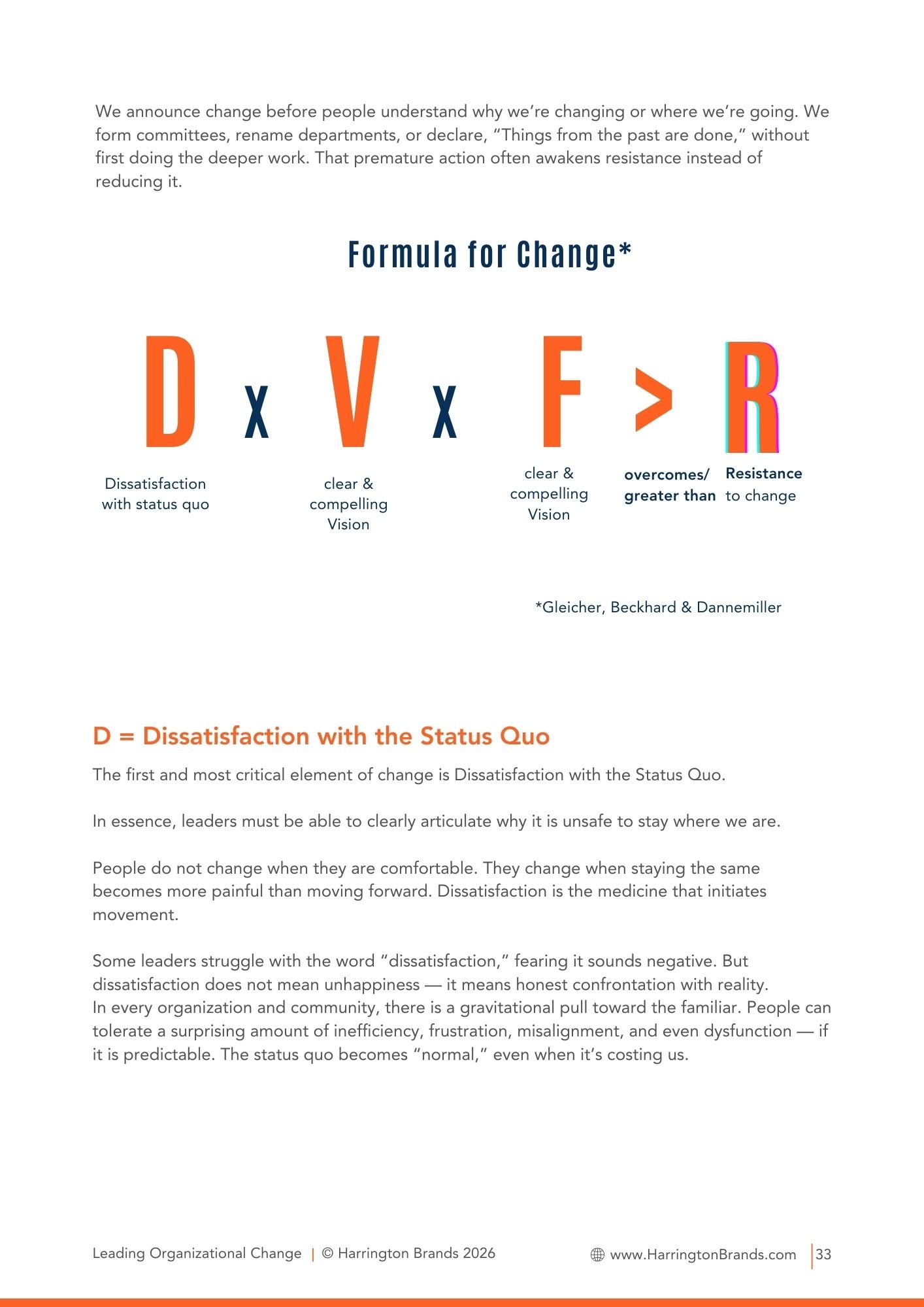
What the Change Formula is and how to apply it
How to build Change Intelligence (CQ) into your culture
What’s Covered in the Booklet
Part One: The People Side of Change
Before we implement anything, we must understand people.
The emotional and neurological roots of change
Why status quo feels safe
The three change personalities and how they collide (or work together)
The stages of shock, denial, frustration, experimentation, decision, and integration
How leaders can stabilize teams in the messy middle
Because if you don’t understand the human response to change, you will misinterpret resistance — and mismanage momentum.
Part Two: Leading Change Within Your Team
Once we understand people, we return to structure.
Why 70% of change efforts fail
The Change Formula
Champions, bystanders, and the “toxic few”
Creating a compelling case for change
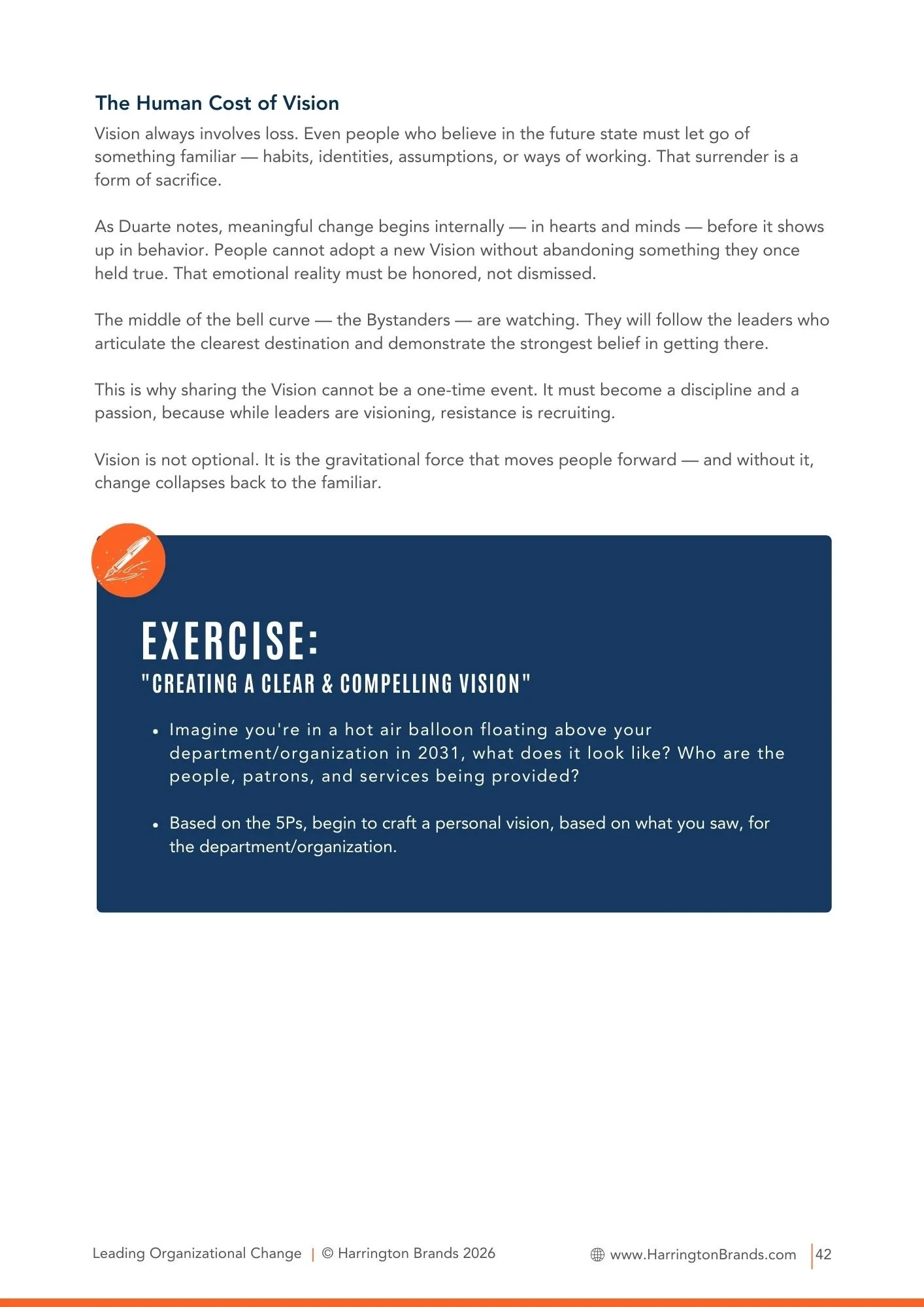
The 5 Ps of vision
Residual resistance and protectionism
Making change stick
Adapting your organization’s culture to be Change Intelligent (CQ)
This section helps you move from awareness to disciplined implementation.
Why This Is Essential Right Now
We are leading in a time of sustained volatility.
Organizations are stretched. Teams are tired. Communities are navigating rapid shifts in technology, policy, economics, and expectations. At the same time, leaders are often expected to provide clarity before certainty exists.
In this environment, moving faster is not always the answer.
Successful change leadership requires returning to a few essential fundamentals:
Understand loss before demanding adoption. Every change requires people to let go of something familiar.
Understand motivation before announcing mandates. People commit to change when they see meaning and purpose behind it.
Understand human behavior before labeling resistance. What looks like opposition is often uncertainty, fear, or protection.
Understand structure before pushing execution. Sustainable change requires alignment, trust, and clear direction.
When leaders take time to understand the human side of change, they create the conditions for real progress—not just activity.
The leaders who succeed in this decade will not simply be the fastest to react. They will be the most grounded, thoughtful, and responsive to how people experience change.
That is the work this booklet is designed to support.
Download Your Free Copy
If you want to:
Get into the head (and hearts) of your people
Understand what motivates them to start or stop change
Create projects that gain traction
Build cultures that adapt without burning out
Develop teams that ride the wave of change instead of being crushed by it
Download your free copy of Leading Organizational Change in Chaotic Times today.