The Leadership Shift: Renew Yourself, Raise Your Altitude
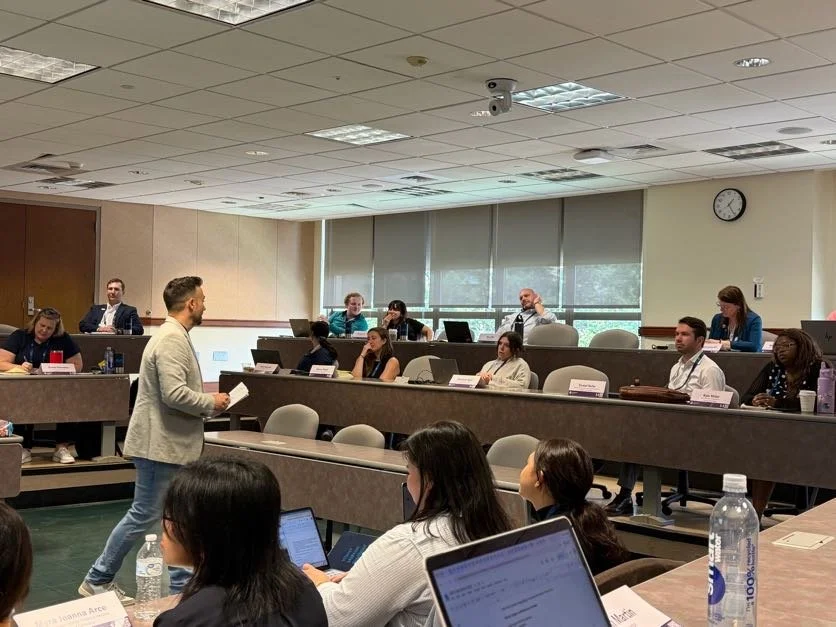
This past week, I returned to the U.S. Chamber of Commerce’s Institute for Organization Management as a faculty member at the Northeast Institute. Across the courses, I had the opportunity to work with more than 90 chamber, association, and nonprofit leaders, and I learned as much from your questions, stories, and experiences as I hope you learned from me.
We covered delegation, empowerment, organizational relevance, and innovation. Yet two ideas seemed to resonate most deeply with you all:
What is the personal cost of leadership for you?
Are you still working as an operator when your organization now needs you to become a strategist?
Those questions are connected. Both ask us to reconsider how we use our energy, where we create value, and what we may need to release in order to grow.
Resonant Leadership Begins With the Leader
In our Culture of Innovation course, we discussed the difference between resonant and dissonant leadership.
Dissonant leaders create stress, disconnection, and burnout, often unintentionally. Their urgency spreads anxiety. They drive people hard without always providing the clarity, trust, or purpose necessary to sustain the work.
Resonant leaders create a different environment. They are attuned to the people around them. They practice self-awareness, self-management, social awareness, and relationship management. In doing so, they create the trust and emotional steadiness that allow people to contribute ideas, take responsible risks, and work through uncertainty together.
This matters because innovation is not primarily a technology challenge. It is a leadership and culture challenge.
People will not offer their best ideas in an environment where mistakes are punished, emotions are volatile, or decisions feel predetermined. Teams need standards and accountability, but they also need leaders who can regulate themselves well enough to create room for others to think.
Leadership is contagious. People feel our frustration, fatigue, and cynicism. They also feel our steadiness, hope, and confidence.
The Hidden Cost of Sacrifice
Leadership requires sacrifice. Sorry if no one told you that during the interview or on your first day.
There are seasons when the work demands longer days, difficult decisions, and a willingness to absorb pressure so others can continue moving forward.
But sacrifice can also become an identity.
Many leaders quietly begin to believe that exhaustion proves commitment. They become accustomed to carrying too much, responding to everything, and placing their own renewal at the bottom of the list.
This is what we discussed as the “sacrifice syndrome.” Leaders push themselves beyond reasonable limits for the sake of the organization. Chronic stress then produces decision fatigue, emotional exhaustion, reduced effectiveness, disengagement, and eventually cynicism (the body keeps score!).
The problem is not sacrifice itself. The problem is sacrifice without renewal.
Strong leaders understand that leadership is a cycle. There are moments to expend energy and carry more than our share. There must also be moments to recover, reflect, reconnect, and rebuild.
Renewal is not selfish. It is part of the job. (Remind your board of that!)
A leader who never renews eventually loses the qualities the organization needs most: judgment, patience, perspective, imagination, compassion, and hope.(Learn more about this concept by reading Resonant Leadership: Renewing Yourself and Connecting with Others Through Mindfulness, Hope, and Compassion)
Leading at the Right Altitude
The second idea that connected deeply with participants was the need to lead at the right altitude.
At a certain level, leadership changes.
You are no longer paid primarily to be the fastest responder, fix every problem, catch every formatting mistake, or remain the smartest operator in the room. You are paid for judgment, direction, leverage, culture, and enterprise growth.
That transition is difficult, particularly for new executives.
Most leaders are promoted because they were excellent operators. They were responsive, dependable, knowledgeable, and willing to step in. Those qualities helped them rise. Eventually, however, the habits that created their success can begin to limit the organization.
The executive continues reviewing every detail, solving every problem, and inserting themselves into every decision. They remain busy and visible, but they become the bottleneck.
This is often driven by two pressures.
The first is imposter syndrome:
“If I stop producing, people may discover that I do not belong here.”
The second is superhuman syndrome:
“If this is important, I should be able to handle it myself.”
Both keep leaders working at the wrong altitude.
They continue proving when they should be scaling.
From Output to Scaling
Leading at the right altitude requires several shifts.
The first is moving from output to scaling. Instead of asking, “Did I complete it?” the executive begins asking, “Is there now a system so this no longer requires me?” The goal is no longer simply to finish the task. The goal is to build the process, clarify ownership, establish standards, and develop the people who can carry the work forward.
The second shift is moving from rescue to coaching.
Every time you rescue a staff member, volunteer, or board member, you build dependence—often dependence on you. Every time you coach someone through a solution, you build capacity. When leaders constantly step in, people learn that the safest response to difficulty is escalation. When leaders coach people through problems, they develop judgment, confidence, and independence.
The third shift is moving from visibility anxiety to strategic presence.
High-level leadership requires tolerating imperfect execution below you, criticism above you, and some ambiguity around your value. Your work becomes harder to see. You are creating alignment, developing people, watching trends, improving systems, protecting culture, and positioning the organization for opportunities that may not arrive for another year. Remember, Jim Collins offers "productive paranoia" as an alternative: "Be prepared, not panicked."
That is still work. In many cases, it is the most important work you can do.
Stop Proving. Start Scaling.
Leaders burn out partly because they continue carrying work that no longer belongs to them. They sacrifice endlessly because they have not built the systems, confidence, or people necessary to share the load.
At the same time, exhausted leaders struggle to elevate. When we are depleted, we become reactive. We return to the familiar satisfaction of fixing small problems because strategic work requires energy, patience, and space.
Renewal allows us to rise. And rising allows us to lead differently.
The next level of leadership may not require you to work harder. It may require you to release what once made you feel useful.
Know when to sacrifice. Know when to renew. What does renewal look like to you (e.g. meditation, working out, vacations, writing/journaling, therapy, family time, etc.)?
A Love Letter to Yourself
At the end of the courses, I asked participants to write a love letter to themselves from ten years ago.
The exercise is simple.
Start by writing "Dear __(enter your name__," Then describe where you are today. Tell that younger version of yourself how much you have grown. Write about where you were stretched, who mentored you, what you survived, and what you learned. Then offer one or two pieces of encouragement for the journey ahead.
The room usually becomes very quiet.
Executives who have spent the week discussing strategy, systems, and performance suddenly remember the person they were before the title, before the difficult board meeting, before the crisis, and before they knew whether any of this would work out.
Most leaders are quick to see how far their organization still has to go. We are less skilled at recognizing how far we have already come.
We remember the mistakes more clearly than the courage. We remember the goals we missed more readily than the people/communities we helped.
That younger person would be proud of you.
They might also ask why you have become so hard on yourself...