How Do We Build Organizations That People Still Want To Belong To, Contribute To, and Lead - What I’m Teaching at Institute This Week
There are weeks when the different parts of your professional life seem to converge around one central idea.
This is one of those weeks.
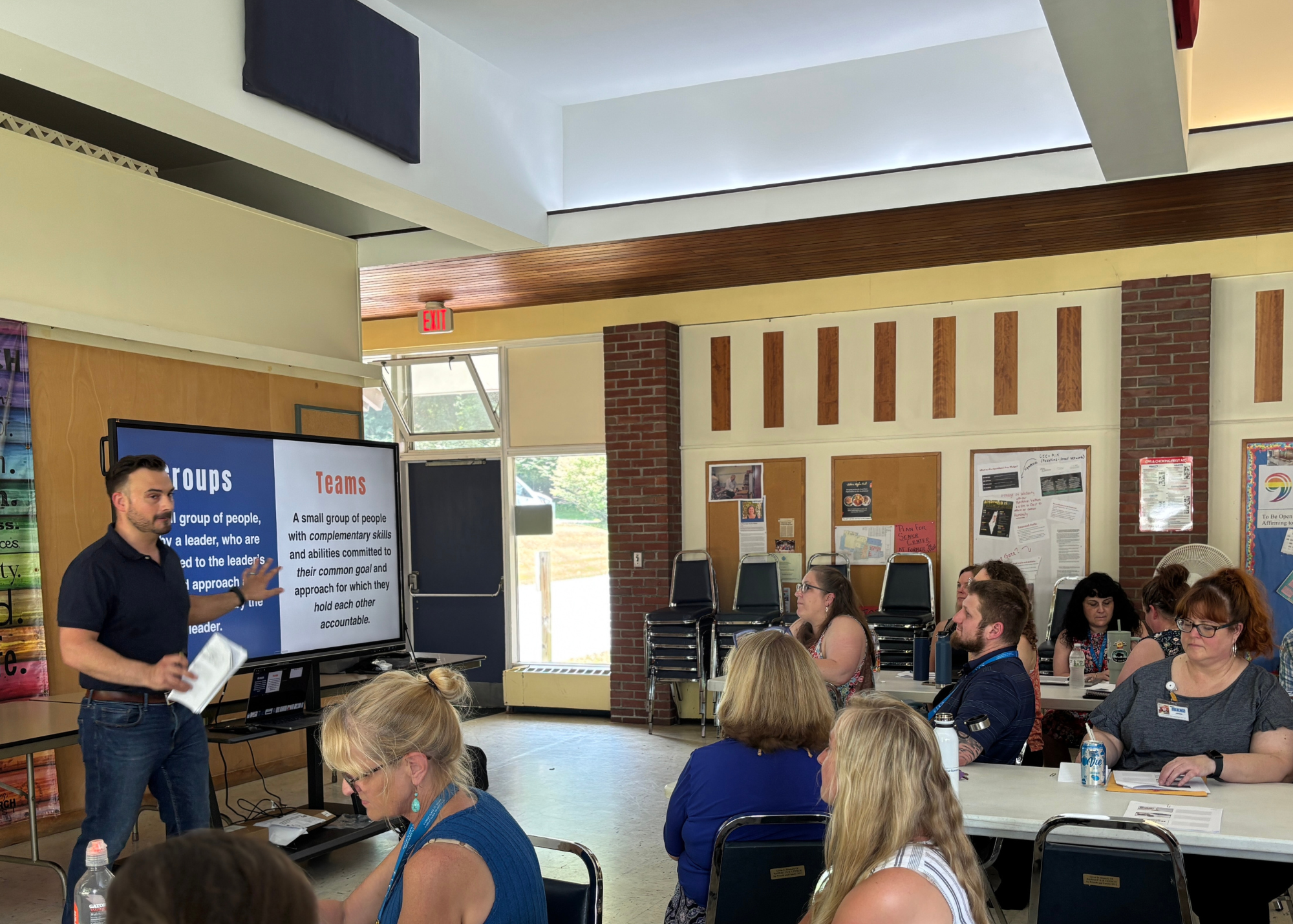
I am returning to Northeast Institute for Organization Management as a faculty member, teaching four courses that, on the surface, address different parts of organizational leadership: membership, organizational relevance, delegation, and innovation.
Institute for Organization Management is the U.S. Chamber of Commerce’s professional development program for chamber, association, and other nonprofit leaders. The multi-year program brings together executives, emerging leaders, staff professionals, and volunteers from across the country for intensive coursework in leadership, membership, governance, finance, advocacy, communications, and organizational management. Some participants are relatively new to the profession and building their foundational skills; others are experienced CEOs and senior leaders looking to sharpen their thinking, learn from peers, and better navigate the distinct challenges of leading member-based and community-centered organizations.
Yet, despite the range of experience in the room and the different subjects I’ll be teaching, all four courses are asking versions of the same question:
How do we build organizations that people still want to belong to, contribute to, and lead?
That question matters well beyond chambers of commerce and professional associations. It applies to nonprofits, community organizations, public institutions, foundations, boards, and businesses. Nearly every organization I work with is wrestling with some combination of declining trust, changing expectations, workforce pressure, limited resources, generational transition, technological disruption, and an increasingly fragmented public environment.
We sometimes treat these as separate problems. Membership needs a campaign. Staff engagement needs a retreat. Innovation needs new technology. Delegation needs a better task list. Strategic planning needs a new document.
But organizations do not experience these issues separately. They experience them as a system.
A leader who cannot delegate eventually becomes a barrier to innovation. A culture without trust will struggle to engage employees, volunteers, or members. An organization that cannot explain its relevance will find recruitment and retention increasingly difficult. A board that protects the past at all costs may unintentionally compromise the future.
This week’s Institute courses are therefore connected by a common leadership philosophy: Innovation (in strategy, membership, product, trust, change, etc.) is less about programs and more about creating the conditions where people feel safe, energized, and empowered to experiment.
Let’s take a quick dive into what I’ll be covering this week:
Recruit, Engage, and Retain Your Members
The week begins with a three-hour course on one of the most persistent challenges facing chambers and associations: how to recruit new members, meaningfully engage them, and build relationships strong enough to retain them.
The organizing principle I will present is pretty straightforward: Recruit like a strategist. Engage like a coach. Retain like a partner.
Membership growth is not simply a sales challenge. It is a change, trust, and relevance challenge. Chambers and associations are operating at an inflection point, shaped by shifting expectations around belonging, technology, demographics, polarization, and community impact. The organizations that thrive will be those that evolve alongside the people and communities they serve.
The students will look at what it takes to create a compelling Case for Change, build support beyond the small group of existing champions, and communicate that change through clear purpose, vision, planning, performance, and shared participation. Recruitment and engagement improve when people understand not only what an organization offers, but where it is going, why that direction matters, and how they can contribute to it.
Trust is equally central. Members are constantly asking whether they can trust an organization’s intentions and its judgment. That credibility is built through both character and competency: integrity, transparency, sound leadership, follow-through, and measurable results. Retention is therefore not merely the outcome of good programming or a timely renewal campaign. It reflects the cumulative deposits - or withdrawals - an organization makes in the relationship over time.
Finally, participants will conduct a broader membership stress test against the 8 forces reshaping community-centered organizations. The goal is to move beyond asking how to sell more memberships and instead examine how our institutions must adapt to remain relevant, credible, inclusive, and worthy of long-term participation.
Strong Chambers for the Future
My second course asks a provocative question: Are chambers and associations dying or are they dividing into distinctly different futures?
The course explores what I describe as a K-shaped future. Some organizations will increase their relevance and impact because they are purpose-driven, data-informed, community-centered, innovative, and increasingly indispensable. Others will continue to lose ground because they remain tied to the status quo, constrained by traditional thinking, and unable to adapt as their communities change. The future is not predetermined, but the path an organization chooses will shape its trajectory.
We will begin with the people side of organizational change: why new visions and plans fail, how leaders create a compelling Case for Change, and how they move beyond a small group of champions to engage the much larger group of uncertain bystanders. Participants will also use the five Ps of communicating change (purpose, picture, plan, performance, and part) to begin shaping a clearer and more actionable vision for the future (can you start to see the common threads in the classes!).
From there, we will examine the 8 forces reshaping community-centered organizations: changing expectations around belonging and gathering; communications technology and trust; scarcity, abundance, and local resilience; global forces with local consequences; demographic transformation; political and social fragmentation; resource alignment and cause-based investment; and catalytic leadership. Through case studies from our work in Southwestern Vermont (Women’s Luncheon, Shires Young Professionals, Business Insider Report), students will consider how chambers can respond not by creating more disconnected programs, but by building focused initiatives that directly address the forces shaping their communities.
The central lesson is that strong chambers evolve alongside the communities they serve. Their future will depend on whether they can remain trusted conveners, interpreters of change, builders of belonging, aligners of resources, and catalysts for collective action.
Keys to Delegation and Empowerment
Delegation is one of the most frequently discussed - and inconsistently practiced - leadership skills. Many leaders understand that they should delegate, yet continue holding tightly to decisions and recurring work because doing it themselves feels faster, safer, or more reliable. The result is often an overwhelmed leader, an underdeveloped team, and an organization unable to grow beyond the person at the center.
This course reframes delegation as more than transferring tasks. It is a leadership-development strategy that builds the competence, confidence, judgment, and ownership of staff, volunteers, and board members.
We will explore the Include–Engage–Empower continuum as well as the C.A.M.P. Method of Motivation: competency, autonomy, meaning, and progress. Together, these models help leaders determine when people need more teaching or coaching or support or empowerment. Through Greenthumb Leadership, participants will also examine how to flex their approach based on an employee’s aptitude and attitude - moving from teaching and coaching toward support and empowerment as people grow.
The course then turns to executive delegation and the challenge of leading at the right altitude. Participants will receive the Harrington Brands white paper, Leading at the Right Altitude: Stop Proving. Start Scaling - Why the Best Leaders Eventually Have to Let Go of Being the Best Operator.
Culture of Innovation
The final course of the week is Culture of Innovation, built around a central premise: innovation is less about technology and more about creating the conditions where people feel safe, energized, and empowered to experiment.
The course is organized around four requirements: innovation requires change, trust, solutions thinking, and leadership. We will examine why organizations often resist change even when they know it is necessary, and how leaders can create a stronger case for moving forward through clear purpose, vision, planning, measurable performance, and shared participation.
Participants will also explore the four levels of a solutions mindset: experiment thinking, a fail-forward mindset, red-flag mechanisms, and adaptive decision-making. The goal is not to celebrate failure or take careless risks, but to test ideas responsibly, learn quickly, identify trouble early, and pivot when new information demands it.
Finally, we will examine the leadership required to sustain innovation: being prepared rather than panicked, disciplined without becoming rigid, creative while remaining evidence-based, and resonant rather than reactive. Innovative leaders do not simply generate ideas. They create the trust, clarity, renewal, and emotional steadiness that allow other people to contribute their best thinking.
Building Organizations Worthy of Your People
Across all four courses, one truth continues to surface:
Organizations do not become stronger by extracting more from people. They become stronger by developing more capacity within their people.
Membership grows when people experience relevance and belonging.
Delegation succeeds when people receive clarity, support, and meaningful authority.
Innovation emerges when people have enough trust to experiment and enough discipline to learn.
Organizations remain strong when leaders can interpret change, align people around a compelling direction, and turn shared purpose into coordinated action.
As I head into Institute this week, I’m looking forward not only to teaching these ideas but to testing them in conversation with chamber and association professionals from across the Northeast. The best classrooms are not places where one expert delivers all the answers. They are communities where experience, evidence, questions, and practical wisdom are brought together in service of better leadership.
Matt Harrington is a Certified Association Executive, chamber CEO, leadership coach, workforce trainer, team facilitator, author of Survival of the Hive, and a graduate and faculty member of the Institute for Organization Management. Through Harrington Brands, he works with nonprofit leaders, boards, teams, and community-centered organizations on leadership development, strategic visioning, organizational change, facilitation, trust, accountability, and culture.