Leading Organizational Change in Chaotic Times
A Practical Guide for GetTING Back to the Fundamentals of Change
We are rushing change. Or we are absorbing it.
New mandates. New technology. New expectations. We pivot, react, implement, announce — and move on.
But rarely do we ask:
What actually drives change?
Why do people resist it?
Why do good initiatives fail?
Why do some teams ride the wave while others fracture?
Our Leading Organizational Change in Chaotic Times booklet is an invitation to take a beat.
This booklet is not about accelerating disruption. It is about returning to the science, the psychology, and the human foundation of change.
Because if we don’t understand change at its core, we will either rush it poorly — or be overwhelmed by it entirely.
Why This Book Exists
Most leaders today are caught in one of two traps:
We rush change.
We push initiatives without understanding readiness, emotion, or resistance.We absorb change.
We react to external forces and try to stabilize after the fact.
Neither approach builds durable transformation.
This booklet brings us back to fundamentals:
The neuroscience of change
The psychology of loss
The human patterns behind resistance
The structure required to implement change successfully
It slows the conversation down so leaders can move forward wisely.
What You Will Learn
If you want to get inside the head of people — this is your guide.
Inside, you will learn:
Why change always begins with loss
How the Kübler-Ross change curve shows up in organizations
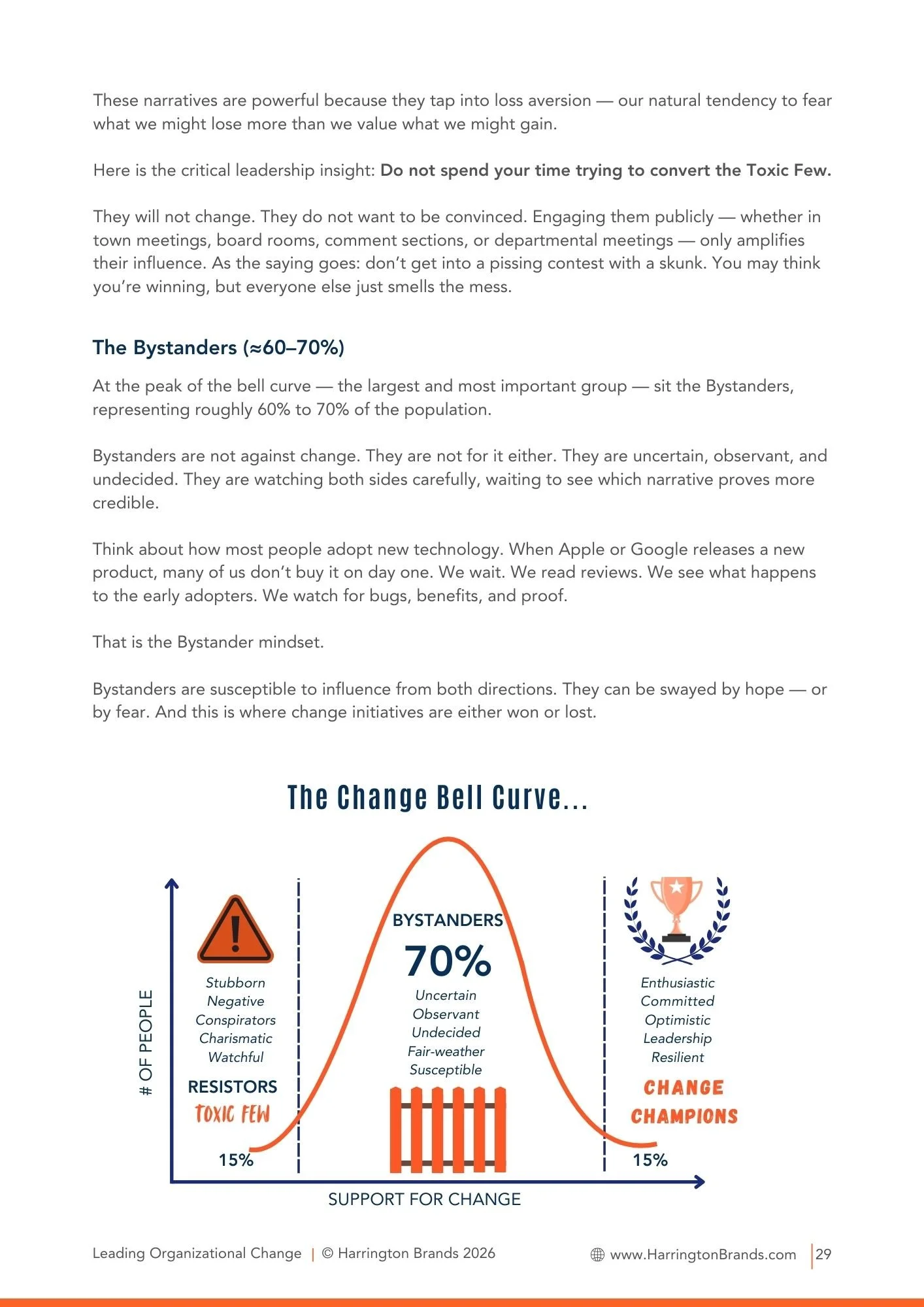
What the “change bell curve” is and why 70% of initiatives fail
What truly motivates people to start — or stop — change
The difference between Conservers, Pragmatists, and Originators
How to reduce resistance without lowering standards
Why to avoid “The Toxic Few” during change initiatives
How to rally your “Change Champions” and “Bystanders”
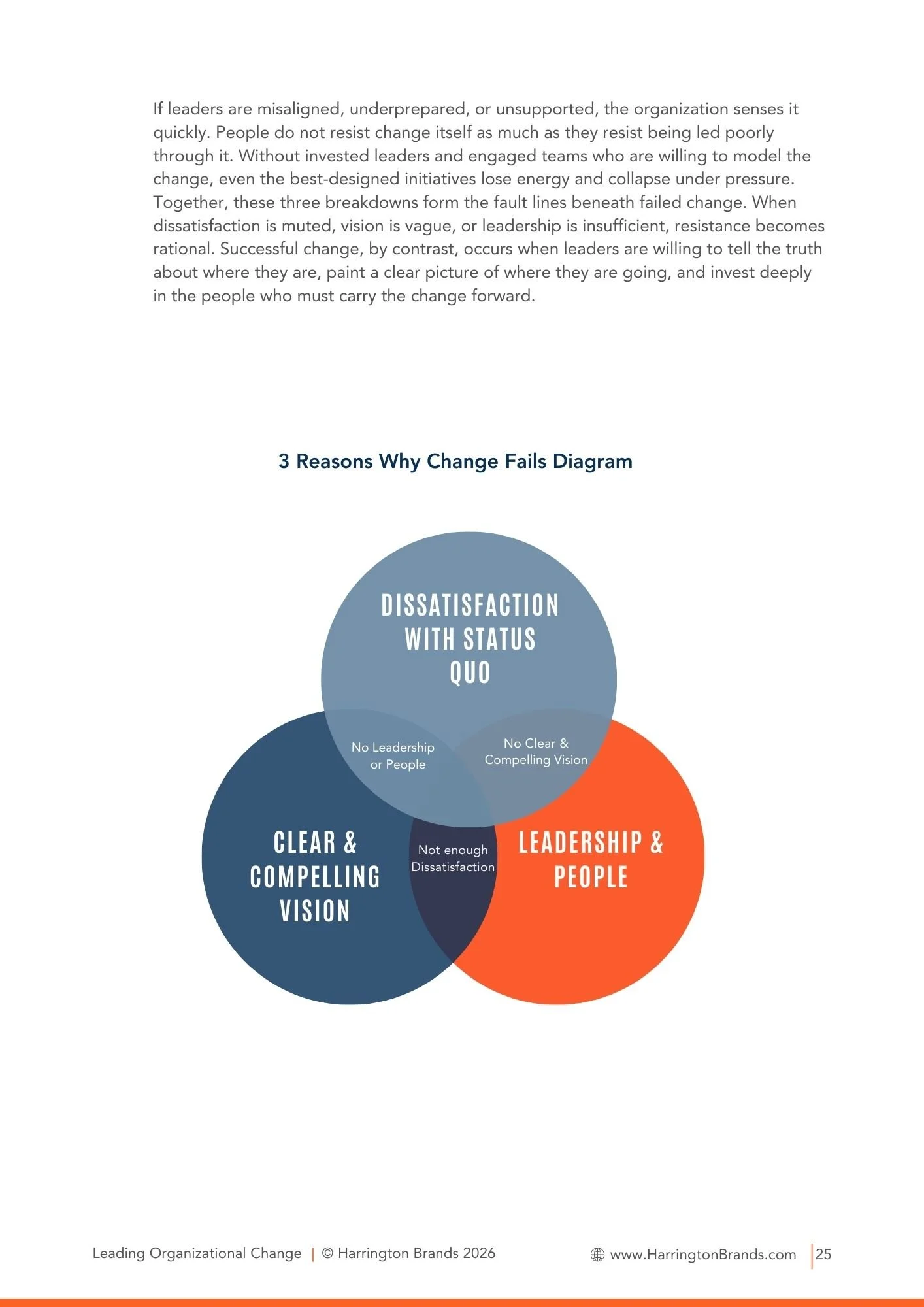
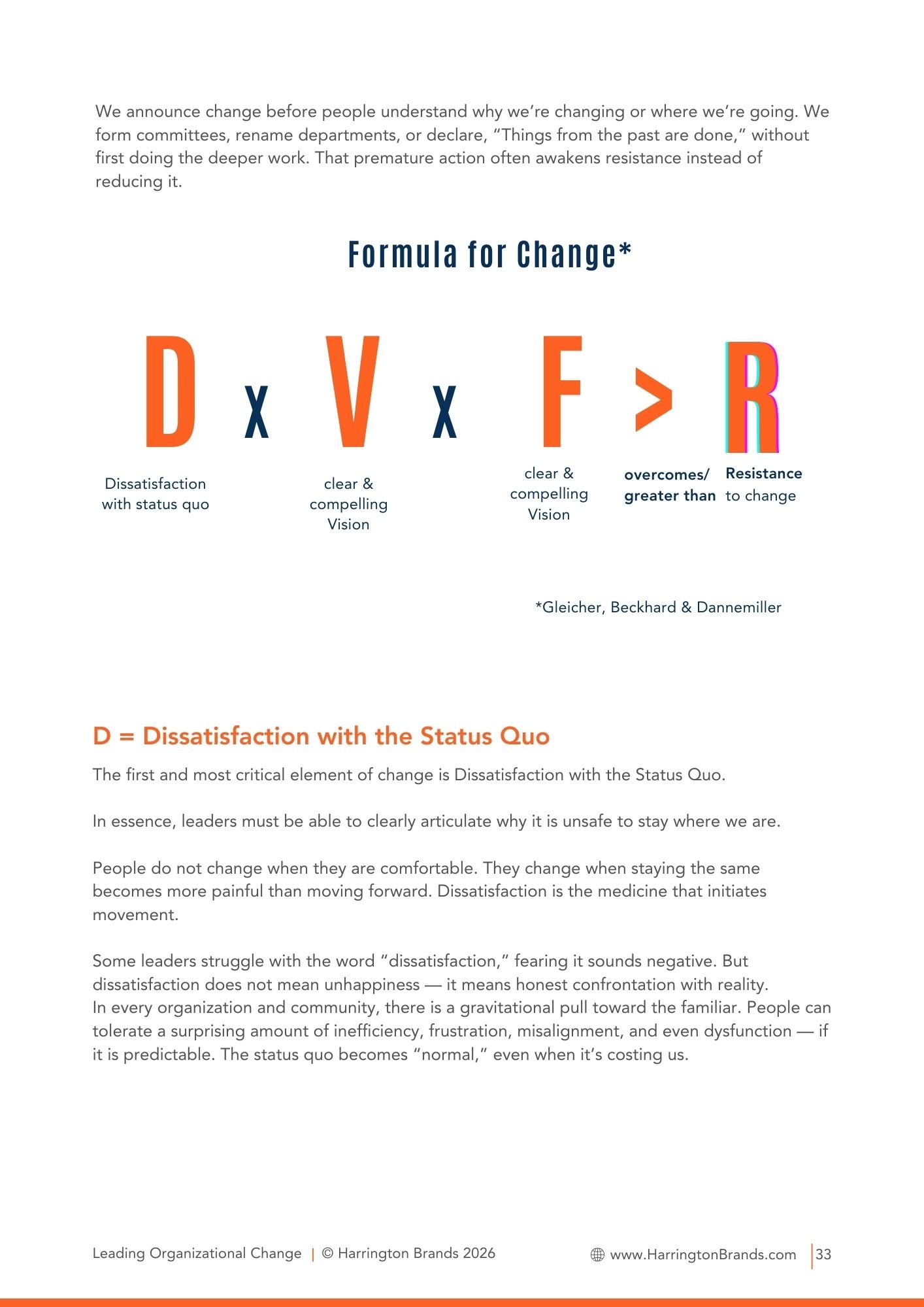
What the Change Formula is and how to apply it
How to build Change Intelligence (CQ) into your culture
What’s Covered in the Booklet
Part One: The People Side of Change
Before we implement anything, we must understand people.
The emotional and neurological roots of change
Why status quo feels safe
The three change personalities and how they collide (or work together)
The stages of shock, denial, frustration, experimentation, decision, and integration
How leaders can stabilize teams in the messy middle
Because if you don’t understand the human response to change, you will misinterpret resistance — and mismanage momentum.
Part Two: Leading Change Within Your Team
Once we understand people, we return to structure.
Why 70% of change efforts fail
The Change Formula
Champions, bystanders, and the “toxic few”
Creating a compelling case for change
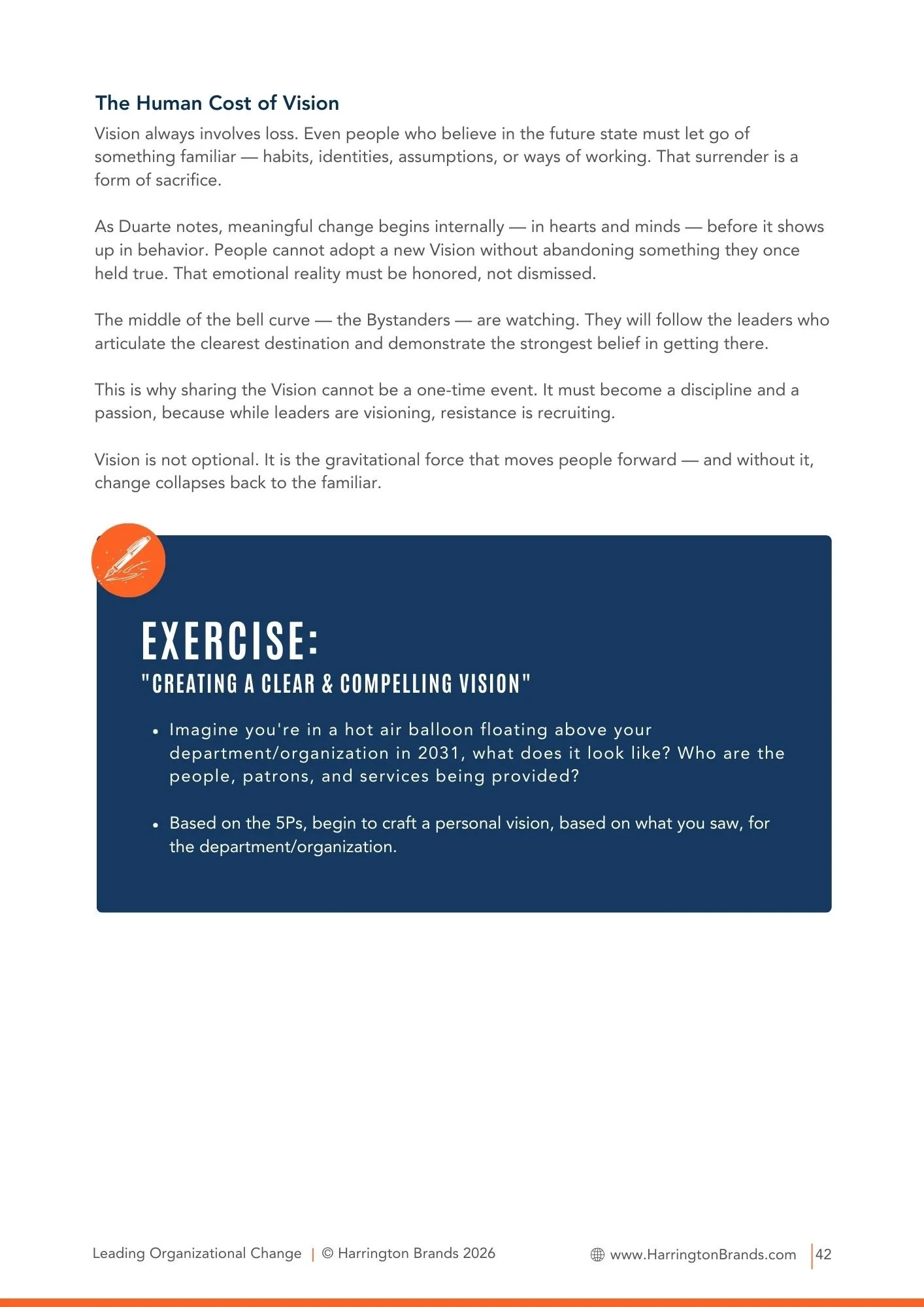
The 5 Ps of vision
Residual resistance and protectionism
Making change stick
Adapting your organization’s culture to be Change Intelligent (CQ)
This section helps you move from awareness to disciplined implementation.
Why This Is Essential Right Now
We are living in sustained volatility.
Organizations are tired. Communities are stretched. Leaders are expected to deliver clarity before certainty exists.
In this environment, speed alone is not the answer.
We must return to fundamentals:
Understand loss before demanding adoption
Understand motivation before announcing mandates
Understand human wiring before labeling resistance
Understand structure before pushing execution
The leaders who succeed in this decade will not be the fastest. They will be the most grounded and responsive to change.
Download Your Free Copy
If you want to:
Get into the head (and hearts) of your people
Understand what motivates them to start or stop change
Create projects that gain traction
Build cultures that adapt without burning out
Develop teams that ride the wave of change instead of being crushed by it
Download your free copy of Leading Organizational Change in Chaotic Times today.