Tough Minds, Tender Hearts: Why High Standards Require High Support

Editor’s Note: I sat down to write this post with a few ideas already circling in my mind. One of them came from an interview I’d been listening to that referenced a line from Martin Luther King, Jr.: “tough minds, tender hearts.” When I glanced at the calendar to see when I’d be publishing, I realized it would land on Martin Luther King Jr. Day. Not planned, but fitting.
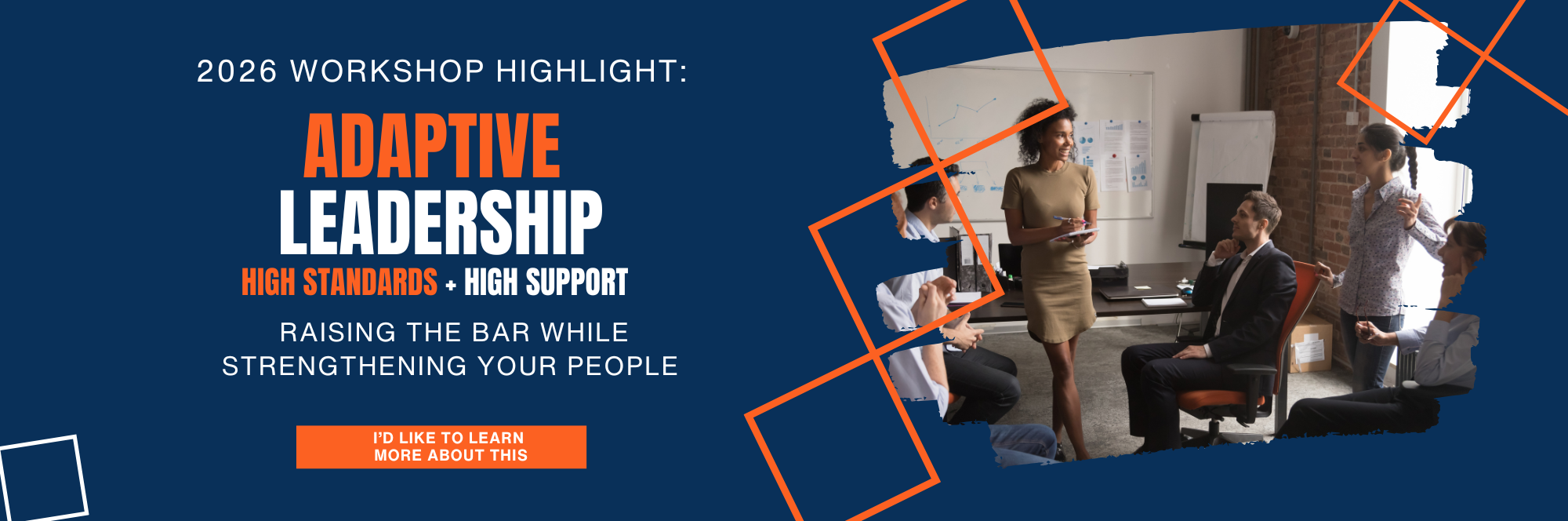
I’ve been facilitating a workshop recently on adaptive management, with a specific focus on building accountability and strengthening expectations around quality and excellence. In nearly every room I step into right now — whether it’s with frontline supervisors, senior leaders, or teams under pressure — the same truth keeps resurfacing: High standards only work when they are matched with high support.
This idea echoed again in a recent Direct Application podcast conversation with Dr. David Yeager, and it’s quickly become one of the clearest leadership principles I offer. Standards matter. They shape culture. They protect the customer experience. They create consistency and pride. But standards by themselves don’t produce great performance — they only increase the demand for it.
And demand without support does something predictable: It doesn’t inspire people to reach higher. It teaches them to play it safe.
If the expectation is excellence, then the work required to get there usually involves risk: trying a new approach, initiating hard conversations, innovating, confronting conflict, stretching beyond comfort, and showing up daily with discipline. That’s not a small ask. So a reasonable person will quietly assess one thing before committing to that level of effort:
Do I believe my leadership (manager, boss, board, etc.) has my back?
Support doesn’t mean lowering standards or protecting people from consequences. Support means the organization is invested in your success as much as it is invested in your output. It means you won’t be abandoned in the gap between “where you are” and “what excellence requires.”
Without that trust, the safest decision isn’t excellence, it’s compliance. It’s average. It’s doing enough to get by without becoming the next example in a meeting.
That’s why “high support” can’t be vague. It has to become visible and practical. Sometimes it looks like leadership training and coaching. Sometimes it’s mentorship pathways, stronger onboarding, or supervisory roundtables where managers can think out loud and sharpen their judgment. Often, it’s simply clarity - especially around decision-making and autonomy - so people know what they own, what they can decide, and when they need alignment. Ambiguity is expensive, and uncertainty drains motivation faster than most leaders realize.
Support also has a deeper layer: meaning. In a world where work is heavier and attention is constantly fragmented, people still need to know why standards matter. Credos and values only become real when leaders model them consistently and communicate them relentlessly. If an organization is in a new era—new challenges, new expectations, new identity—leaders have to help people connect the daily effort to the larger story. Otherwise, standards start to feel like pressure instead of purpose.
This is where I come back to Dr. King’s phrase, “a tough mind and a tender heart,” because it’s a description of adaptive leadership in one sentence. A leader (manager, coach, supervisor, boss) needs a tough mind — rigorous, curious, honest, unwilling to drift into mediocrity. But that same leader needs a tender heart — patient enough to tolerate misfires, steady enough to coach through mistakes, and committed enough to develop people instead of just measuring them.
The organizations that win over time are not the ones that demand the most. They’re the ones that build environments where high performance is sustainable. They pair excellence with investment. They treat support as a strategy, not a sentiment.
So if you’re raising the bar in your organization, the question isn’t whether you’re asking for more. The real question is whether you’re building the support required to reach it.